Table Of Content
In Germany a contemporary of Bacon, Albertus Magnus, described powder charge formulas for rockets in his book De mirabilibus mundi. The first firearms appeared about 1325; they used a closed tube and black powder (now referred to as gunpowder) to propel a ball, somewhat erratically, over varying distances. Military engineers then began to invent and refine designs for both guns and rockets. That is, the flight path is pre-determined and very small alterations in flight are possible, if at all.
Ancient India -for UPSC and other State PCS Examination
The United States Air Force's first operational surface-to-surface missile was the winged, mobile, nuclear-capable MGM-1 Matador, also similar in concept to the V-1. Deployment overseas began in 1954, first to West Germany and later to the Republic of China and South Korea. Air Force deployed Matador units in West Germany, whose missiles were capable of striking targets in the Warsaw Pact, from their fixed day-to-day sites to unannounced dispersed launch locations.
Quasi-ballistic missiles
What Iran's attack on Israel revealed about its weapons arsenal - The Washington Post
What Iran's attack on Israel revealed about its weapons arsenal.
Posted: Wed, 17 Apr 2024 21:58:00 GMT [source]
As advanced cruise missiles approach their target, remote operators can use a camera in the nose of the missile to see what the missile sees. This gives them the option to manually guide the missile to its target or to abort the strike. In 1944, during World War II, Germany deployed the first operational cruise missiles.
Not the answer you're looking for? Browse other questions tagged missilescontrol-surfaces.
Eventually, gravity guides the missile — and its payload, which might be an explosive, a chemical or biological weapon, or a nuclear device — down toward its target. Throw-weight is a measure of the effective weight of ballistic missile payloads. It was once also a consideration in the design of naval ships and the number and size of their guns.
Modern cruise missiles may move at subsonic, supersonic, or hypersonic speeds, are self-navigating, and can fly on a non-ballistic, extremely low-altitude trajectory. The near-exclusive focus on the nuclear capacity of strategic-range weapons confined serious development of cruise and ballistic missile technology to the world’s nuclear powers—particularly the United States and the former Soviet Union. These two countries took different paths in exploiting missile technology. Soviet cruise missiles, for instance, were designed mostly for tactical antiship use rather than for threatening strategic land targets (as was the U.S. emphasis). Throughout the ballistic missile arms race, the United States tended to streamline its weapons, seeking greater accuracy and lower explosive power, or yield. Meanwhile, the Soviet Union, perhaps to make up for its difficulties in solving guidance problems, concentrated on larger missiles and higher yields.

If it's fired on a flatter trajectory, it could reach potentially reach anywhere on the U.S. mainland. Missile defense is one of those options, and the US already employs a few forms. Part of any missile defense system is the sensors, like specially focused radar, that can detect incoming attacks, and then track those weapons as they travel. These radars then send that tracking information to interceptors, which are missiles launched to fly and destroy the incoming attacking missile. Shooting missiles at other missiles is a hard problem because an incoming threat arrives at great speed, and because the cost calculus can favor an attacker. Interceptors, like shorter-ranged Patriot missiles or longer-ranged ballistic interceptors, are often more expensive than the missiles they are intercepting.
Short-range subsonic
Some ballistic missile contain multiple and independently targeted warheads on a warhead bus. The Soviet Union and China built ICBMs as well, setting up a world where a nuclear war was deterred by the prospect of mutual assured destruction. The most common mission for cruise missiles is to attack relatively high-value targets such as ships, command bunkers, bridges and dams.[52] Modern guidance systems permit accurate attacks. In the Soviet Union, Sergei Korolev headed the GIRD-06 cruise missile project from 1932 to 1939, which used a rocket-powered boost-glide bomb design.
RECENT ARTICLES
Some missiles can be fitted with any of a variety of navigation systems (Inertial navigation, TERCOM, or satellite navigation). Larger cruise missiles can carry either a conventional or a nuclear warhead, while smaller ones carry only conventional warheads. Beginning in mid-1940, Clarence N. Hickman, who had worked with Robert Goddard during World War I, supervised the development of a refined design of the hand-launched rocket.
World War I and after
Terminal Phase begins when the detached warhead(s) reenter the Earth’s atmosphere and ends upon impact or detonation. During this phase, which can last for less than a minute, strategic warheads can be traveling at speeds greater than 3,200 kilometers per hour (1,988 miles per hour). A ballistic trajectory is the path of any object that is launched but with no active propulsion during its actual flight.
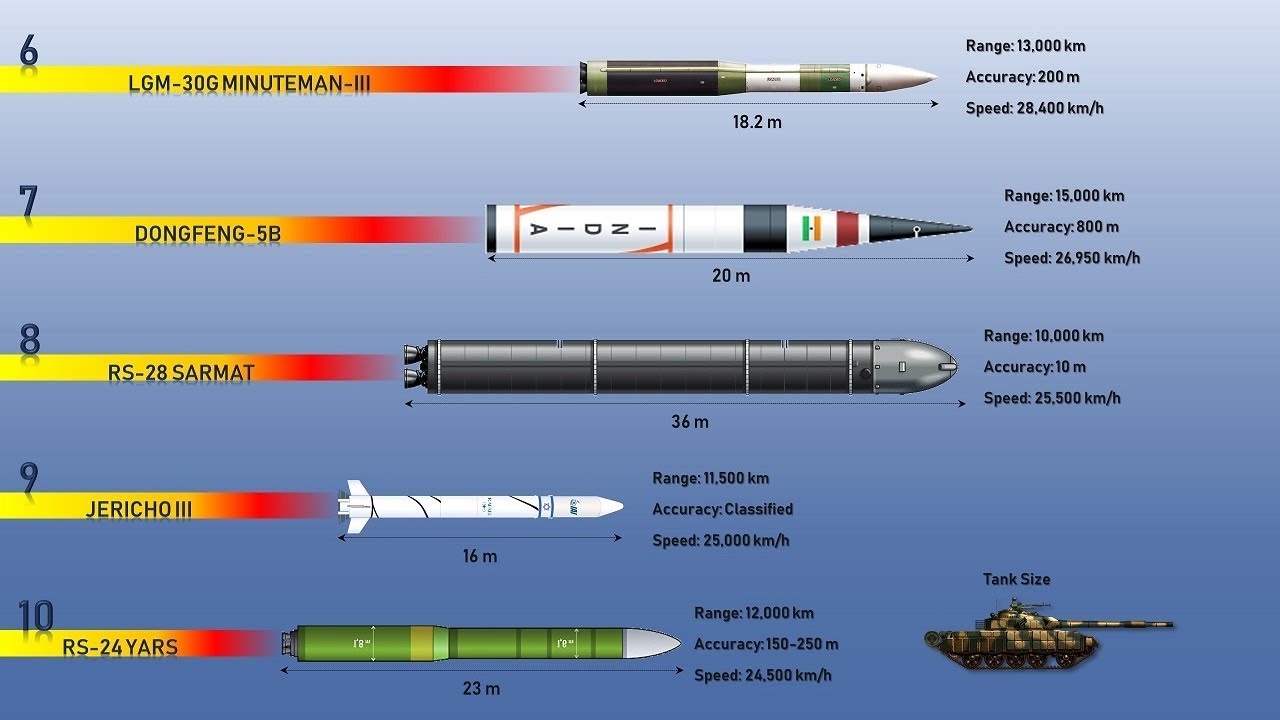
By 1937 the Dornberger–Braun team, expanded to hundreds of scientists, engineers, and technicians, moved its operations from Kummersdorf to Peenemünde, a deserted area on the Baltic coast. Here the technology for a long-range ballistic missile was developed and tested (see below Strategic missiles). Ballistic missiles can travel at supersonic to hypersonic speeds, while cruise missiles are typically subsonic or supersonic but slower than ballistic missiles. The United States Air Force (USAF) deploys an air-launched cruise missile, the AGM-86 ALCM. The Boeing B-52 Stratofortress is the exclusive delivery vehicle for the AGM-86 and AGM-129 ACM.
The German counterpart of the bazooka was a light 88-millimetre rocket launcher known as Panzerschreck (“Tank Terror”) or Ofenrohr (“Stovepipe”).
Unge believed that his aerial torpedoes would be valuable as surface-to-air weapons against dirigibles. Velocity and range were increased, and about 1909 the Krupp armament firm of Germany purchased the patents and a number of rockets for further experimentation. The United States has deployed nine nuclear cruise missiles at one time or another. In Great Britain, initial effort was aimed at achieving the equivalent destructive power of the three-inch and later the 3.7-inch antiaircraft gun. Two important innovations were introduced by the British in connection with the three-inch rocket. A parachute and wire device was rocketed aloft, trailing a wire that unwound at high speed from a bobbin on the ground with the object of snagging the aircraft’s propellers or shearing off the wings.

The United States produced more than four million of the 4.5-inch rockets and 15 million of the smaller bazooka rockets during the war. In Sweden about the turn of the century, Wilhelm Unge invented a device described as an “aerial torpedo.” Based upon the stickless Hale rocket, it incorporated a number of design improvements. One of these was a rocket motor nozzle that caused the gas flow to converge and then diverge.



No comments:
Post a Comment